By Savanna Vidal, MD
A new study suggests that GLP-1 medications may be associated with better health outcomes for people living with hidradenitis suppurativa (HS). Researchers found that people with HS who were prescribed GLP-1 medications had lower risks of cardiovascular events, death, and several other serious health complications.
While these findings are encouraging, more research is needed to determine whether GLP-1 medications directly contribute to improved health outcomes in people with HS.
Why Are Researchers Studying GLP-1 Medications in HS?
Hidradenitis suppurativa is a chronic inflammatory skin condition that can affect more than just the skin.
People living with HS often experience other medical conditions, known as comorbidities, including:
- Diabetes
- Metabolic syndrome
- High cholesterol
- Cardiovascular disease
These conditions can contribute to an increased risk of serious health complications, including heart disease and death.
GLP-1 receptor agonists (GLP-1RAs) are medications commonly used to help manage type 2 diabetes, support weight management, and, for certain medications, reduce cardiovascular risk.
GLP-1 medications are available in injectable and oral forms. Examples include semaglutide, liraglutide, dulaglutide, exenatide, and tirzepatide.
Emerging research suggests these medications may also have benefits for inflammatory conditions such as HS.
What Was the Purpose of the Study?
Researchers wanted to understand whether GLP-1 medication use among people with hidradenitis suppurativa was associated with improved health outcomes.
Specifically, they examined whether people prescribed GLP-1 medications experienced lower risks of death, cardiovascular events, and other serious medical complications compared with people who did not have documented GLP-1 prescriptions.
How Was the Study Conducted?
Researchers analyzed de-identified electronic health records from TriNetX, a large health research database.
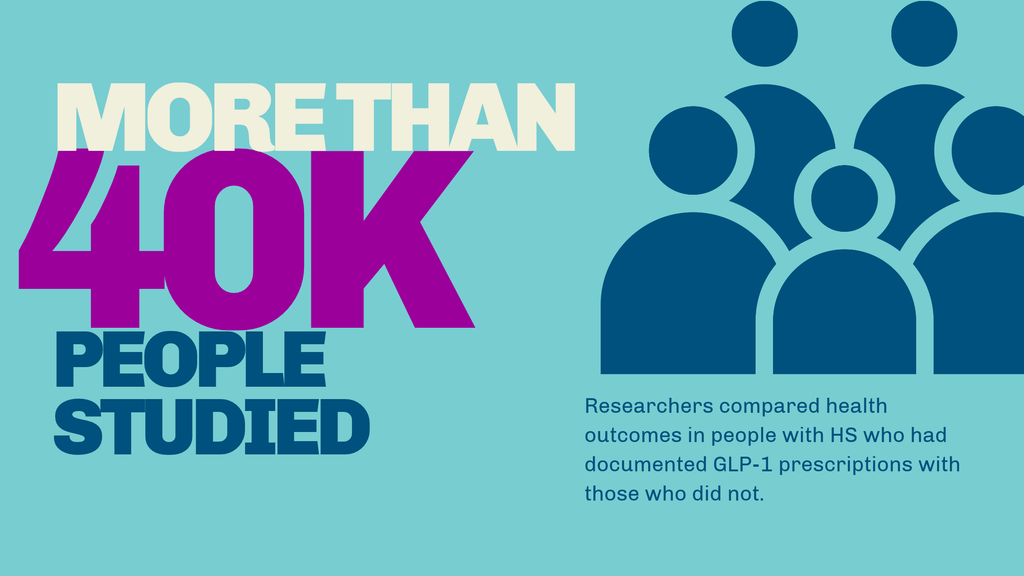
The study included 40,954 adults living with HS, divided into two groups:
- 20,477 patients who received at least two prescriptions for a GLP-1 medication.
- 20,477 patients who had no documented GLP-1 prescriptions in their medical records.
Researchers used matching methods to account for measured differences between the two groups.
The average participant age was approximately 44 years, and about 81–82% of participants were female.
Health outcomes were evaluated at one and two years following the initial GLP-1 prescription.

Key Findings: GLP-1 Use Was Associated With Better Health Outcomes
The study identified several encouraging associations between GLP-1 medication use and health outcomes among people living with HS.
Lower Risk of Death and Cardiovascular Events
At both one and two years, GLP-1 medication use was associated with lower risks of:
- All-cause mortality: Death from any cause.
- Major cardiovascular events: Including heart attack, stroke, and death from cardiovascular causes.
These findings are particularly relevant because people with HS already face an increased risk of cardiovascular disease and related health complications.
Lower Risk of Other Serious Health Complications
Researchers also found associations between GLP-1 medication use and lower risks of several additional conditions, including:
- Cellulitis: A bacterial skin infection.
- Sepsis: A life-threatening response to infection that can damage organs.
- Acute kidney injury: A sudden decline in kidney function.
- Starting dialysis: Treatment needed when the kidneys cannot adequately filter waste from the blood.
- Lymphedema: Swelling caused by a buildup of lymphatic fluid in body tissues.
- Heart failure: A condition in which the heart cannot pump blood as effectively as it should.
- Suicidal thoughts or attempts.
These associations were observed at both the one-year and two-year follow-up periods.
Were Benefits Seen in People Without Diabetes or Obesity?
Researchers also examined whether the findings differed among people who did not have diabetes or obesity.
Among patients without diabetes, GLP-1 medication use showed similar associations with improved health outcomes.
Among patients without obesity, researchers observed similar trends toward better outcomes. However, the differences were not large enough to confidently determine whether GLP-1 medication use was associated with improved outcomes in this group.
These findings raise important questions about whether GLP-1 medications may have broader health effects beyond their established uses.
What Are the Limitations of the Study?
Although the results are promising, several limitations are important to understand.
1. The study was observational.
Researchers examined existing medical records rather than conducting a randomized clinical trial. This means the study identified associations but cannot establish that GLP-1 medications directly caused the better health outcomes.
2. Other health factors may have influenced the results.
Differences in overall health, lifestyle, or other medications may have affected outcomes, even after researchers accounted for measured differences between the groups.
3. Prescription records do not confirm medication use.
Although patients had documented GLP-1 prescriptions, researchers could not confirm whether they took the medications as prescribed or how long they continued treatment.
Some patients may also have used GLP-1 medications without those prescriptions appearing in their medical records.
4. Certain patient information was unavailable.
The database did not include socioeconomic status or