
By: Eriel Lauffer
Why This Conversation Matters
At HS Connect, we’re shining a light on a lesser-known but important overlap: Down syndrome (DS) and hidradenitis suppurativa (HS). While HS is often recognized for painful boils and tunnels under the skin, its impact on individuals with Down syndrome remains under-researched and under-discussed.
By blending accurate science with practical advice, we aim to:
- Raise awareness of HS symptoms within the Down syndrome community
- Offer actionable caregiving strategies
- Provide accessible, easy-to-find resources for families and clinicians
Down Syndrome 101 (Quick Refresher)
Down syndrome is a genetic condition caused by an extra copy of chromosome 21. Key features include:
- Distinct facial characteristics
- Mild-to-moderate intellectual disability
- Hypotonia (low muscle tone)
- Higher risk of certain medical conditions such as congenital heart disease, thyroid disorders, and immune dysregulation.
Just as no two fingerprints are the same, no two people with DS experience health challenges in identical ways. That individuality matters when we pivot to skin conditions like HS.
Hidradenitis Suppurativa 101 (The Skin Sidekick)
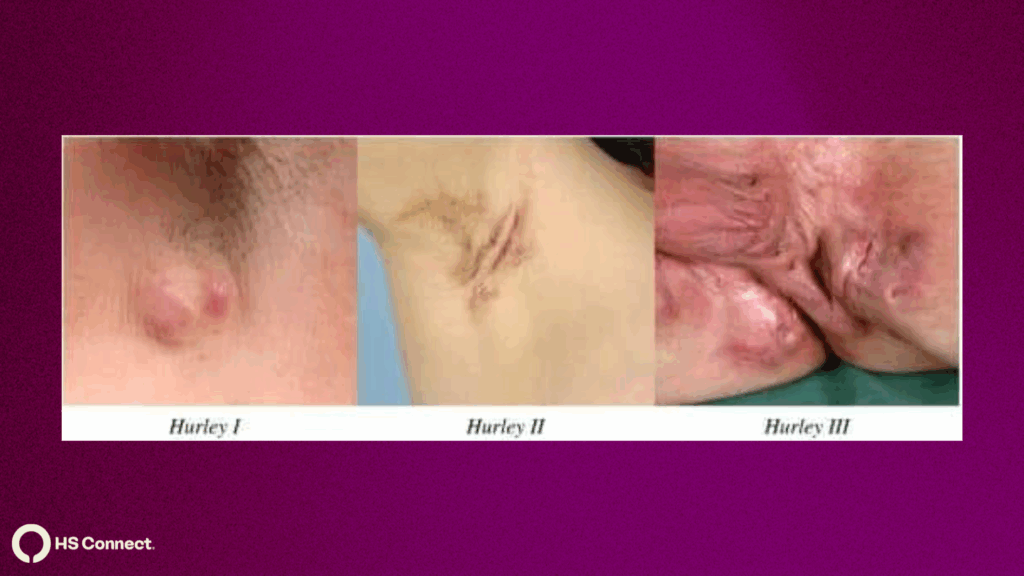
Hidradenitis suppurativa is a chronic inflammatory skin disease marked by:
- Painful nodules, boils, and abscesses (often in armpits, groin, buttocks, under breasts)
- Tunnels—called sinus tracts—that can connect lesions under the skin
- Scarring that thickens and limits range of motion
The cause isn’t infection alone; it’s a mix of follicular occlusion, genetics, hormones, and immune activation.
Keywords you may see online:
“HS lesions,” “chronic boils,” “intertriginous areas,” “Hurley staging,” and—yes—“worst pain ever.”
The Overlap: Why People with Down Syndrome May Face Extra HS Risks
Current studies on Down syndrome and hidradenitis suppurativa are sparse, but emerging data and clinical anecdotes point to several themes:
| Potential Risk Factor | Why It Matters in Down Syndrome | How to Mitigate |
| Immune System Differences | People with DS have a unique immune profile, including higher basal inflammation and altered T-cell function. | Early dermatology referral; watch minor skin infections like hawks. |
| Obesity & Metabolic Changes | Hypotonia and hormonal patterns can make weight gain more likely. Body mass index (BMI) is a known HS trigger. | Adaptive fitness programs; dietitian familiar with DS. |
| Skin Friction & Moisture | Hypotonia leads to skin folds where sweat and friction love to party. | Moisture-wicking fabrics; barrier creams. |
| Communication Gaps | Pain or itching may be under-reported due to speech delays or sensory processing differences. | Teach pain scales using visuals; schedule routine skin checks. |
| Medication Metabolism | DS can alter how certain drugs are processed, plus congenital heart disease may limit options. | Coordinate with dermatology, cardiology, and pharmacy for custom dosing. |
Remember: Correlation is not destiny. Awareness plus proactive care can nip many HS cascades in the bud.
Spotting HS Early—Even When Communication Is Tricky
What if your self-advocate doesn’t verbalize pain the conventional way? Try these strategies:
- Routine Skin Tours
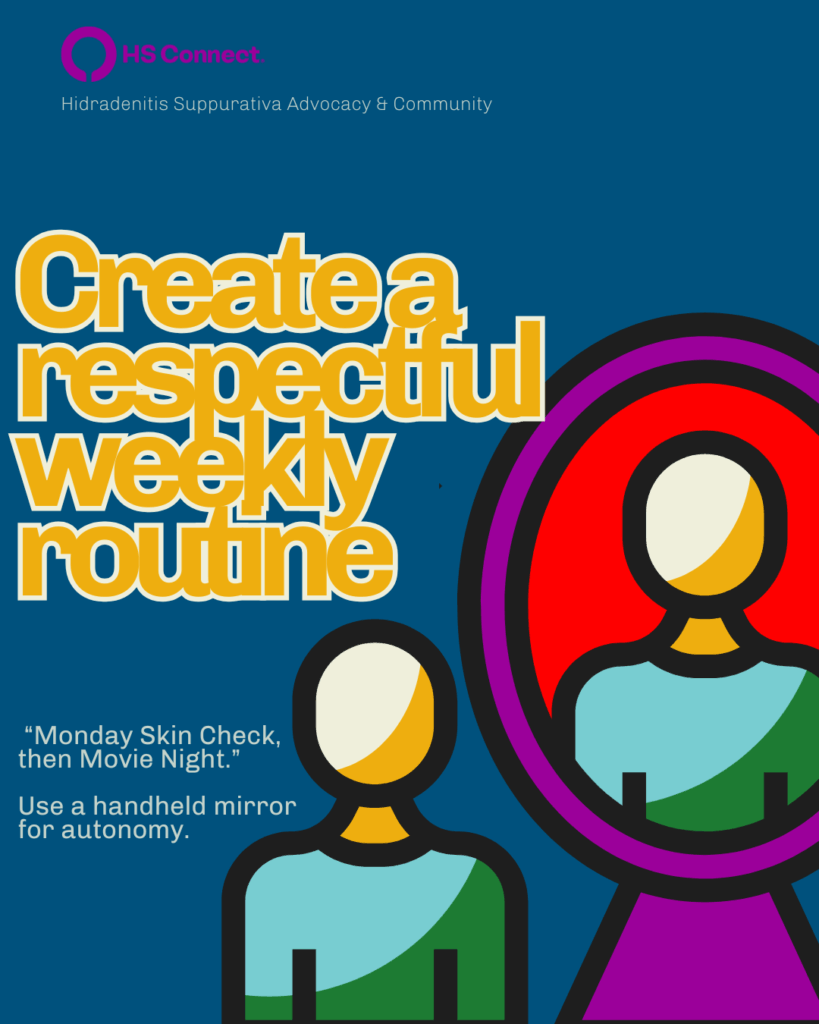
Create a respectful weekly routine—“Monday Skin Check, then Movie Night.” Use a handheld mirror for autonomy. - Color-Coded Pain Cards
Print a stoplight chart (green = fine, yellow = ouch, red = BIG OUCH). Ask them to point to a color instead of describing pain. - Behavioral Clues
Watch for: guarding arms, waddling gait, shirt stretched away from armpits, withdrawing from hugs. - Photo Diary (HIPAA safe)
Use a secure app or private cloud folder. Date-stamp photos so dermatology can see lesion progression—even if your loved one freezes in the clinic. Check out the user-friendly Papaya App. - Sensory Awareness
Some individuals with DS have heightened tactile defensiveness. A scratchy bandage might cause more distress than the lesion itself. Opt for ultra-soft, latex-free dressings. See our community-recommended products.
Treatment Roadmap Tailored to Down Syndrome
A. First-Line Strategies
- Topicals — Clindamycin lotion, benzoyl peroxide cleanser.
- Oral Antibiotics — Tetracyclines or a combination rifampin-clindamycin (monitor liver enzymes!).
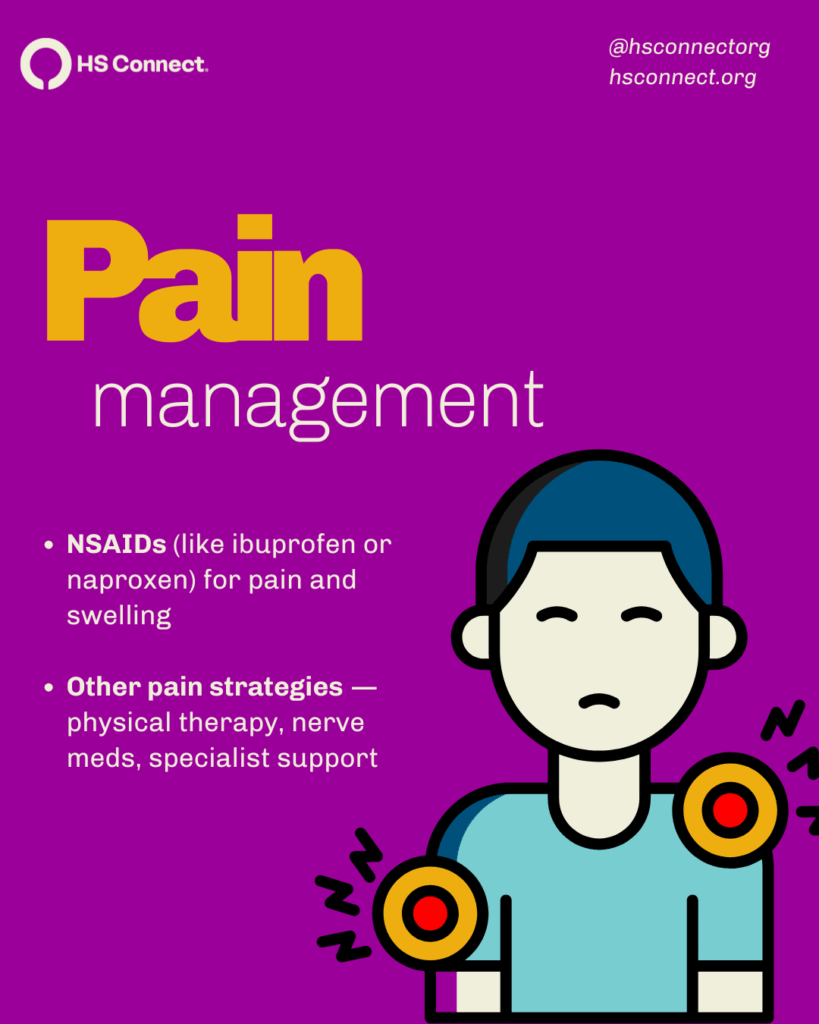
- Pain Control — Acetaminophen is DS-friendly; NSAIDs if cardiology allows.
See our article on medication treatments.
B. Advanced Medical Options
| Treatment | Considerations for Down Syndrome | Pro Tips |
| Biologics (adalimumab, infliximab) | Immune modulation suits HS but monitor infection risk; vaccines must be up to date. | Pre-infusion “practice day” to ease anxiety; allow fidget toys. |
| Hormonal Therapies | Cyproterone or spironolactone for females; endocrine team must rule out thyroid imbalance first. | Use pictograms for daily dosing reminders. |
| Laser & Light Therapies | No systemic meds, minimal side effects. Requires staying still; sedation may be needed. | Create custom weighted blanket for proprioceptive comfort. |
| Surgery (drainage, deroofing) | Anesthesia can pose airway and cardiac challenges in DS. | Insist on anesthesiologist experienced with Trisomy 21 anatomy. |
C. Holistic & Lifestyle Interventions
- Anti-inflammatory Nutrition — Emphasize fish, berries, and veggies; limit refined carbs. Visual meal boards help with autonomy.
- Adaptive Exercise — Aqua therapy reduces friction and boosts endorphins.
- Stress Management — Music therapy, yoga with visual cues, or simple breathing apps designed for neurodiverse users.
Day-to-Day Skin Care Hacks for Comfort & Independence
- Seam-Free, Tag-Free Shirts
Seamless athletic wear reduces friction. Buy in multipacks so laundry lapses don’t derail your gains. - DIY No-Show Dressings
Use bandages cut into heart shapes—adds fun and lowers “medical” vibe. - Cooling Packs in Lunchboxes
A mini gel pack tucked near the underarm soothes flares during school or supported work. - Color Coding Supplies
Blue bin = clean dressings. Red bin = used dressings. Empowers visual learners. - Scent-Free Everything
Artificial fragrances can irritate HS tracts and overwhelm sensory systems. Choose hypoallergenic laundry detergent and body wash.
Championing Your Loved One in the Exam Room
- Pre-Visit Social Story — Create a picture book outlining step-by-step what will happen at the dermatologist.
- Ask for Larger Exam Rooms — Wheelchairs, support staff, or just space to pace may reduce anxiety.
- Plain-Language Summaries — Request that clinicians write instructions at a fifth-grade reading level with bulleted steps.
- Shared Decision-Making — Offer two treatment choices whenever possible so the patient exercises autonomy.

Mind-Body Support: Mental Health, Community, and Fun
HS can be isolating; so can having a disability in a world built for neurotypical bodies. Layered stigma isn’t inevitable, though. Combat it with:
- Peer Mentoring Programs — Pair teens with DS and HS for virtual game nights and wound-care pep talks.
- Inclusive Sports — Special Olympics swimming or unified basketball for camaraderie without abrasive uniforms.
- Creative Expression — Art therapy lets frustrations out without requiring five-paragraph essays.
- Counseling — Psychologists familiar with intellectual disability can teach coping skills for pain, body image, and medical trauma.
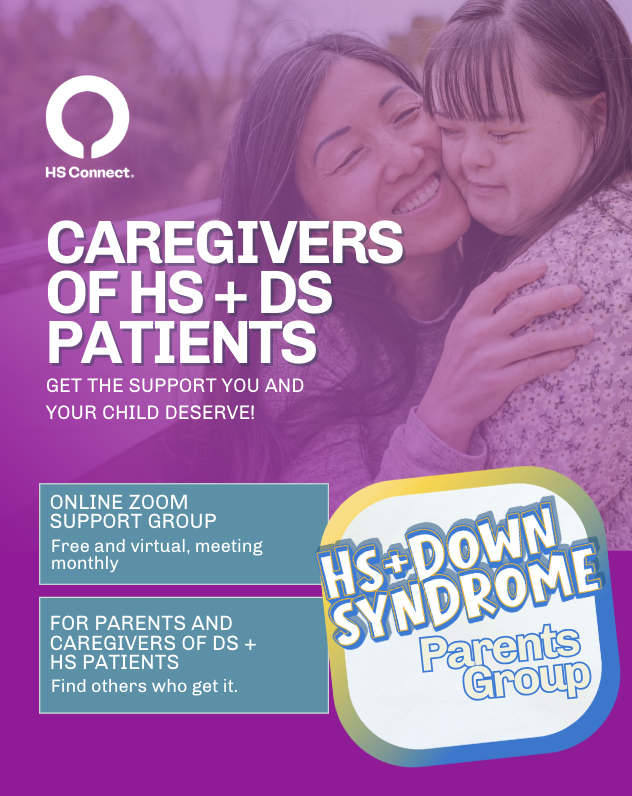
Caring for someone with both Down syndrome and hidradenitis suppurativa can feel overwhelming—but you don’t have to do it alone.
The HS + Down Syndrome Parents Group by HS Connect is a dedicated space created specifically for parents and caregivers navigating this dual diagnosis.
Inside the group, you’ll find:
- Real-life caregiver insights
- Trusted product and treatment recommendations
- A safe space to ask questions and share experiences
- Encouragement from people who truly understand
Whether you’re newly navigating a diagnosis or further along in the journey, this community is here to support you every step of the way.
Research Horizons & How to Get Involved
Scientists are finally tuning into the Down syndrome–HS connection. Ongoing studies explore:
- Genetic polymorphisms in chromosome 21 that may amplify inflammatory pathways.
- How trisomy-related antimicrobial peptides influence HS lesion microbiomes.
- Safety profiles of biologics in dual diagnoses.
Want to help?
- Join ClinicalTrials.gov alerts for “Hidradenitis Suppurativa AND Down Syndrome.”
- Donate tissue samples if surgery is already scheduled (ask your surgeon about research biobanks).
- Share your story.
Ten Quick Wins for Caregivers This Month
- Replace one cotton tee with a seamless moisture-wicking version.
- Take three lesion photos with today’s date in the corner—future you will thank you.
- Teach the stoplight pain chart during a favorite TV show’s commercial break.
- Schedule that overdue dental cleaning (gum infections can flare HS).
- Download a guided breathing app with cartoon visuals.
- Switch to fragrance-free detergent—your wallet barely notices.
- Prep a dermatologist FAQ sheet: meds tried, pain scale avg, top three struggles.
- Join one HS Facebook group and one Down syndrome forum—cross-pollinate wisdom!
- Celebrate tiny victories: “Hey, you kept the dressing on for 4 hours—high five!”
- Share this article to three families—let’s make awareness contagious.
Key Takeaways
- Down syndrome and hidradenitis suppurativa often intersect, likely due to immune differences, friction, and obesity risk factors.
- Early detection is doable with visual pain scales, weekly “skin tours,” and photo diaries.
- Treatments range from topicals to biologics to surgery; each requires DS-specific tweaks for safety and success.
- Day-to-day comfort hinges on soft fabrics, barrier creams, and inclusive self-care routines.
- Advocacy in the clinic and research arenas amplifies voices historically left out of HS studies.
Share the love: If this guide helped you understand Down syndrome and HS even 1% better, pass it on. Awareness multiplies when we hit that share button—especially during Down Syndrome Awareness Month. Let’s keep every body thriving, one skin cell and one chromosome at a time.
Resources
- National Down Syndrome Society (NDSS) – ndss.org
- HS Connect Down Syndrome Support Group
- Special Olympics Healthy Athletes – specialolympics.org
- SOAR (SSI/SSDI Outreach, Access & Recovery) – soarworks.samhsa.gov
- ClinicalTrials.gov HS Listings – search “hidradenitis suppurativa” and filter by “recruiting”
Medical Disclaimer
The information provided by HS Connect (“we,” “us,” or “our”) on this website HSConnect.org] (the “Website”) is for general informational purposes only. All content, including text, graphics, images, and information, is presented as an educational resource and is not intended as a substitute for professional medical advice, diagnosis, or treatment.
Please consult with a qualified healthcare provider before making any decisions or taking any action based on the information you find on this Website. Do not disregard, avoid, or delay obtaining medical or health-related advice from your healthcare provider because of something you have read on this Website.
This Website does not recommend or endorse any specific tests, physicians, products, procedures, opinions, or other information that may be mentioned on this website. Reliance on any information provided on the Website, its content creators, or others appearing on the website is solely at your own risk.
If you think you may have a medical emergency, call your doctor, go to the nearest emergency department, or call emergency services immediately. We are not responsible for any adverse effects resulting from your use of or reliance on any information or content on this Website.
By using this Website, you acknowledge and agree to this disclaimer in full.