
Savanna Vidal, BS, M.D. Candidate | The George Washington University School of Medicine
Study background
Hidradenitis suppurativa (HS) is a long-term (chronic) condition that can greatly affect a person’s physical health, emotional well-being, and quality of life. Despite this impact, we do not know how many people across the world have HS, which is referred to as the global prevalence.
Previous research estimated that about 0.4% of people in the world have HS. However, those estimates were based on studies that only included certain parts of the world, like Western Europe, Scandinavia, the United States, and Australia. The methods used in those studies were also inconsistent. Because of this, researchers are not confident that the 0.4% estimate truly reflects how common HS is globally.

Purpose of the study
This study aimed to determine the global prevalence of HS around the world (how common it is around the world) and whether the prevalence varies based on factors such as age, sex, where a person lives, body weight, smoking, and a country’s overall income and level of development.
How the study was done
- Researchers used information from the Global Hidradenitis Suppurativa Atlas (GHiSA), an international project designed to better understand how common HS is around the world.
- In this project, adults visiting a clinic with someone else (for reasons not related to skin) were given a questionnaire asking about HS symptoms. If their answers suggested they may have HS, a doctor checked them to confirm the diagnosis.
- Each country reported how many people were diagnosed with HS and how many people were screened in total. Researchers combined the data to calculate one overall global estimate. This method is called a meta-analysis.
- The study screened 22,743 people from 6 continents and 23 countries, including: Algeria, Australia, Bangladesh, Chile, China, France, Ghana, Greece, Greenland, Indonesia, Iran, Malaysia, Nigeria, North Macedonia, Oman, Papua New Guinea, Poland, Saudi Arabia, Serbia, South Africa, Sri Lanka, the Netherlands, Türkiye
Key findings
- Globally, about 1% of people are estimated to have HS.
- HS rates varied by country, which were highest in Saudi Arabia (~4%) and lowest in Bangladesh (~0.1%).
- However, when taking population sizes into account, there were no significant differences in HS rates between continents or regions.
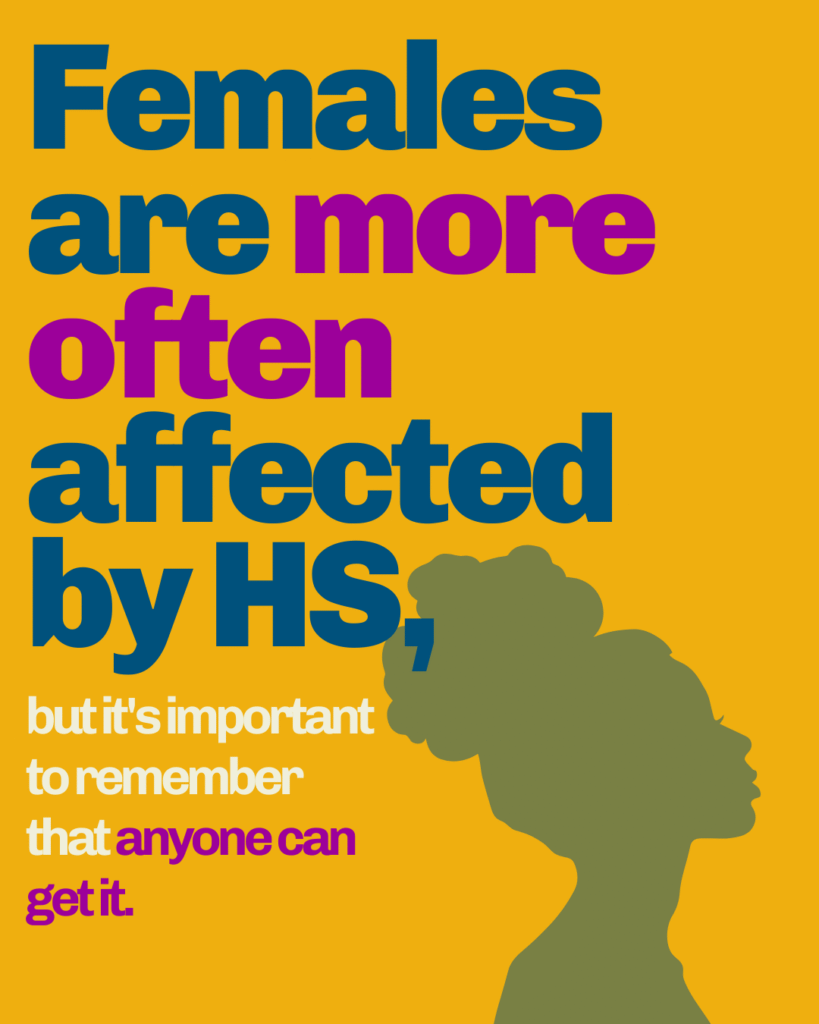
- HS was more common in females, who made up 56% of people with HS in the study.
- Data analysis showed that female sex was the only factor linked to different HS prevalence rates.
- No clear links were found between HS prevalence and age, BMI, smoking, or the country’s income and development markers.
Limitations of the study
- There is still missing data from other countries around the world. While 74 countries were invited, 51 were not included due to not responding to the invitation, incomplete participation, or not following study procedures.
- This study did not look at how severe HS was. Given how study participants were identified, most people with HS in this study were likely to have mild HS.
- While no links were found between HS prevalence and higher body mass index, smoking, and a country’s income and development, more studies are needed to explore the relationship of these factors with HS.
Key takeaway points
- HS is more common than we previously thought. You are not alone…based on this study, about 1 in 100 people worldwide have HS.
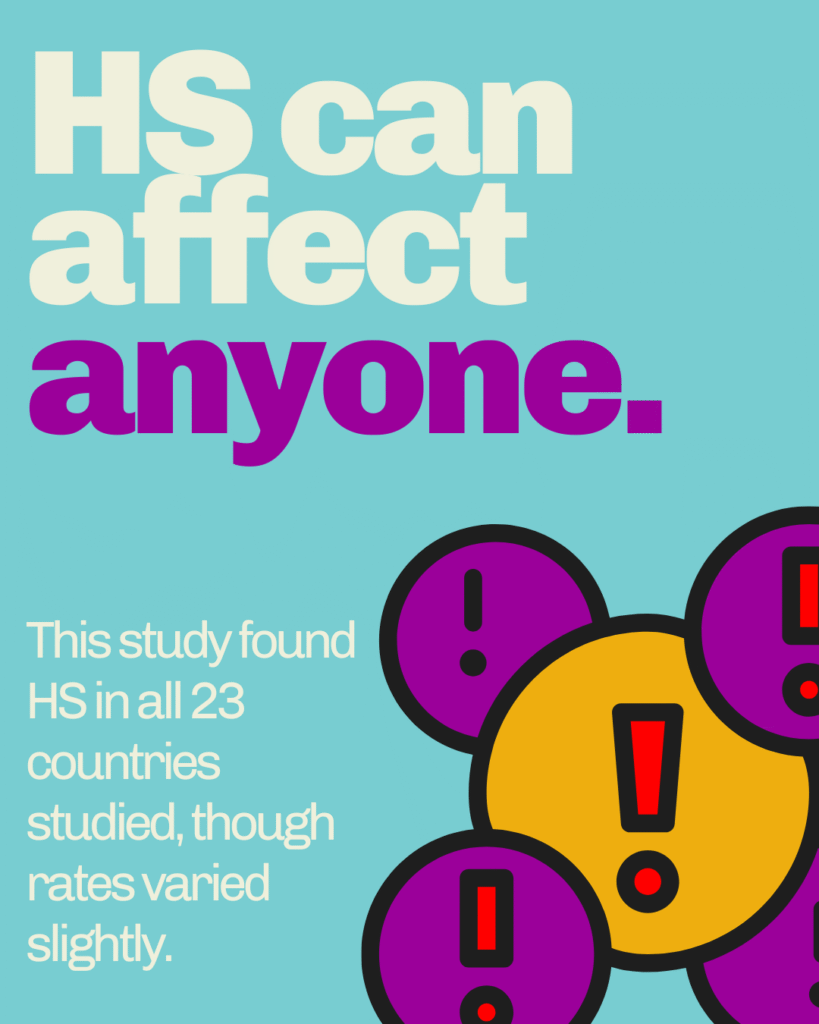
- HS was found in all 23 countries studied. While the number of people with HS varied between countries, rates were generally similar across regions.
- HS has been consistently shown to be more common in females. Still, people of any sex can still be affected by HS.
References
- Bouazzi D, Andersen RK, Vinding GR, et al. The Global Hidradenitis Suppurativa Atlas Methodology: Combining Global Proportions in a Pooled Analysis. Dermatology. 2024;240(3):369-375. doi: 10.1159/000536389. Epub 2024 Feb 14. PMID: 38354718.