
By: Cara Nethery
Living with hidradenitis suppurativa (HS) means carrying more than just the pain of flares. For many, it also means carrying the invisible weight of anxiety. These two conditions don’t just sit side by side — they interact, fuel each other, and create a cycle that can feel impossible to break. But with understanding, tools, and support, there is a way forward.
What Anxiety Really Is
Anxiety is your body’s alarm system. It’s designed to alert you to danger so you can respond — run, fight, freeze, or fawn. In small doses, it’s protective. But when the alarm keeps ringing, it can feel like racing thoughts, muscle tension, trouble sleeping, or an uneasy restlessness you can’t shake. Instead of protecting you, it begins to wear you down.
The HS Connection
For people with HS, anxiety is never far away. Flares are painful, unpredictable, and sometimes humiliating. The fear of “when will the next one hit?” adds a constant hum of stress. Then there’s the impact on confidence, intimacy, friendships, and work. Even managing appointments, treatments, and medical costs can be overwhelming.

And here’s the kicker: anxiety doesn’t just react to HS — it can worsen it. Stress hormones and inflammation feed into flares, delaying healing and intensifying pain. HS fuels anxiety. Anxiety fuels HS. It’s a two-way street.
A Real-Life Scenario
Imagine this: you’ve been invited to a beautiful out-of-town wedding. You’ve packed your favorite sleeveless dress, the one you’ve been excited to wear for weeks. But the morning of the wedding, you wake up to a painful HS flare under your arms.
Suddenly your nervous system kicks into high gear:
- Fight – You snap, throw the dress down, and lash out at anyone who tries to help.
- Flight – You cancel completely, deciding it’s easier to stay hidden.
- Freeze – You stand frozen in front of the mirror, running through “what ifs” until you’re late.
- Flop – You put the dress on, paste on a smile, and numb yourself just to survive the night.
This isn’t weakness. This is your survival system misfiring — treating a flare like a threat to your very safety.
What the Research Says
Science backs up what patients feel every day:
- A 2025 JAMA Dermatology study of over 10,000 HS patients found they were 48% more likely to experience anxiety than people without HS.
- A 2024 U.S. study of nearly 9,600 HS patients confirmed higher anxiety rates compared to almost a million controls.
- Research on body image and intimacy shows HS patients face unique psychological burdens.
- Reviews from 2023 suggest inflammation itself may also influence mood and anxiety levels.
- Overall, around 1 in 5 people with HS report anxiety — about double the rate of the general population.
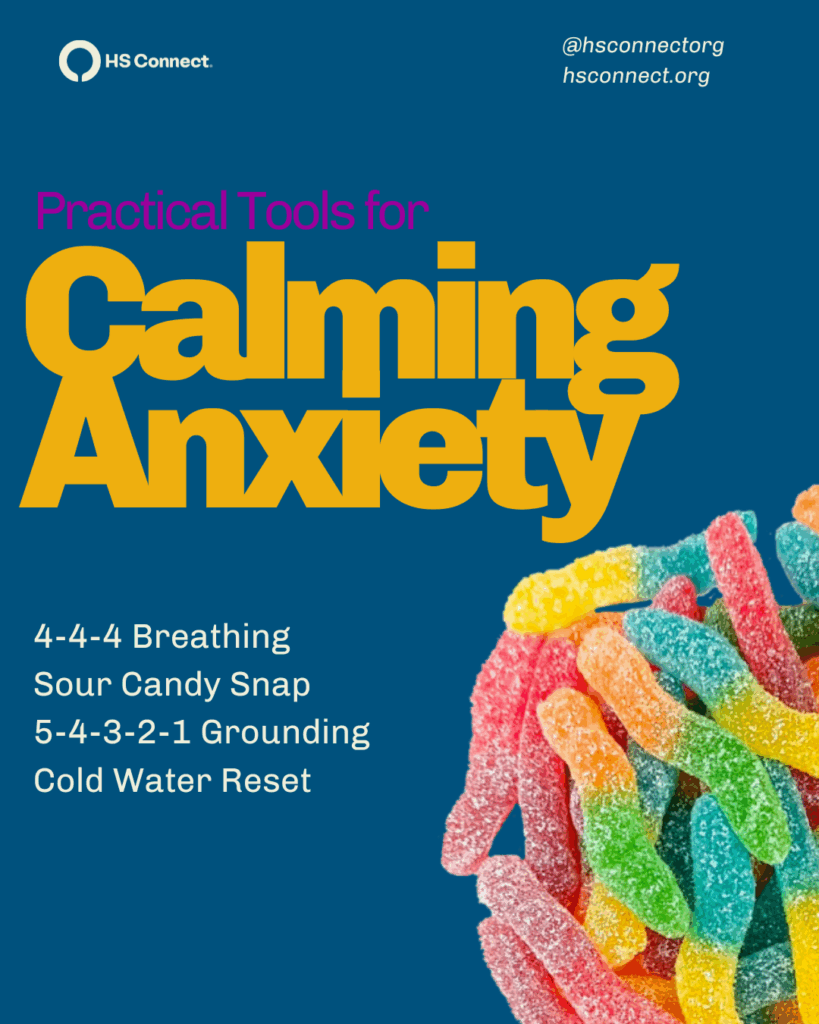
Practical Tools for Calming Anxiety
Anxiety might feel overwhelming, but there are quick, proven ways to interrupt the cycle:
- 4-4-4 Breathing: Inhale for 4, hold for 4, exhale for 4. Repeat. Signals safety to the nervous system.
- Sour Candy Snap: Pop a Warhead and let the sensory jolt interrupt spiraling thoughts.
- 5-4-3-2-1 Grounding: Name things you see, feel, hear, smell, taste to anchor yourself in the present.
- Cold Water Reset: Splash your face or wrists, roll your shoulders, or take a short walk to shift your state.
These aren’t cures. They’re small, accessible tools to regain a sense of control — to remind your body that it is safe.
A Final Word of Hope
If you’re living with HS and anxiety, know this: you are not broken. Your body is doing its best to protect you, even if it misfires sometimes. With the right support, science, and tools, you can retrain your system to calm down, find relief, and carve out moments of joy and confidence — flare or no flare.
You can live with HS. You can live with anxiety. And you can still live fully.