
When we talk about hidradenitis suppurativa (HS), the conversation often centers on symptoms—pain, flares, treatment options, and long-term management.
But HS does not exist in a vacuum.
It intersects with identity, access to care, and how safe someone feels in their own body and within healthcare spaces. For individuals in LGBTQ+ communities, those intersections can create additional barriers that are often overlooked.
As advocates, it’s important that we recognize those gaps—and actively work to close them.

HS Is More Than a Skin Condition
HS affects areas of the body that are often deeply connected to identity and vulnerability, including:
- Underarms
- Groin
- Inner thighs
- Under the breasts
For many people, these areas are tied not only to physical health, but also to:
- Gender identity
- Body autonomy
- Intimacy and relationships
- Self-expression
When HS impacts these areas, it can affect more than just the skin. It can influence how someone experiences their body, how they engage with others, and how comfortable they feel seeking care.
For LGBTQ+ individuals—who may already navigate complex relationships with their bodies and healthcare systems—the impact can be especially layered.
The Reality of Healthcare Barriers
Accessing care for HS can be challenging for anyone.
However, LGBTQ+ individuals often face additional barriers, including:
- Fear of discrimination or judgment
- Previous negative healthcare experiences
- Providers lacking cultural competency
- Hesitation to disclose identity or symptoms
These barriers can contribute to:
- Delayed diagnosis
- Underreporting of symptoms
- Limited treatment options
- Avoidance of healthcare altogether
From an advocacy standpoint, this is where the conversation must shift.
No one should have to choose between receiving care and feeling safe.
Why Affirming Care Matters in HS
Affirming care is not an extra—it is essential.
It means creating healthcare environments where individuals feel:
- Respected
- Heard
- Safe to share openly
- Supported in their full identity
For someone living with HS, this can directly impact:
- Willingness to seek treatment
- Ability to communicate symptoms accurately
- Long-term health outcomes
Finding a knowledgeable provider is often one of the first steps toward receiving affirming, effective care. If you’re looking for an HS specialist, explore the HS Connect Dermatologist Finder to connect with providers familiar with the condition.
When providers understand and respect a patient’s identity, they build trust. And trust is foundational to effective care—especially for a chronic condition like HS that often requires ongoing management.

HRT, Testosterone, and HS: A Needed Conversation
For some transgender and gender-diverse people, hormone replacement therapy (HRT) is an essential part of gender-affirming care.
For trans men and transmasculine individuals, testosterone can help align physical characteristics with gender identity and should never be viewed as something that should simply be stopped without medical guidance.
At the same time, HS advocates and healthcare providers should acknowledge an important reality: testosterone may worsen HS symptoms for some individuals.
Research in this area is still evolving, but several studies suggest a possible connection.
A 2024 retrospective review published in the Journal of the American Academy of Dermatology found that transgender and gender-diverse patients who started testosterone were more likely to report worsening HS symptoms.
Additional case reports and case series have described transgender men who developed HS—or experienced worsening symptoms—after initiating testosterone therapy.
However, not all research points in the same direction. A 2024 research letter published in JAAD International did not find a clear association between testosterone use and worsening of pre-existing HS.
What Does This Mean for Patients?
The relationship between hormones and HS is complex and still being studied.
What we do know is that patients deserve informed, affirming conversations about their care.
That may include:
- Open communication with both dermatology and gender-affirming care providers
- Monitoring HS symptoms when starting or adjusting hormones
- Adjusting HS treatment plans when needed
- Seeking providers who understand both HS and gender-affirming healthcare
Gender-affirming care and HS management should never be treated as competing priorities.
Patients deserve providers who can support both.
Importantly, individuals should never start, stop, or adjust hormone therapy without guidance from their healthcare team. Decisions about gender-affirming care should always be made in partnership with qualified medical professionals who understand the patient’s overall health needs and goals.
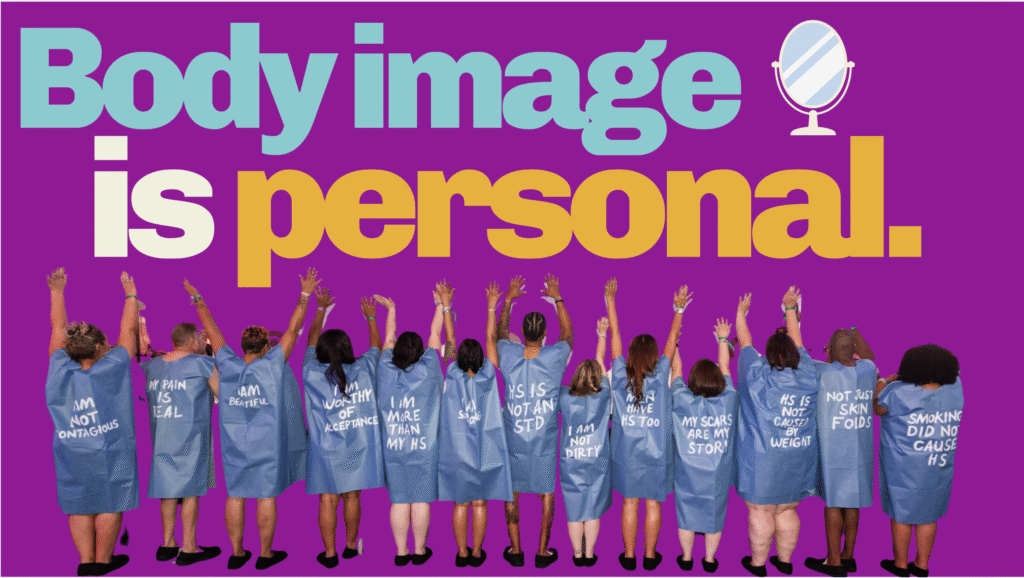
Understanding the Overlap Between HS, Identity, and Body Image
Body image concerns are common among people living with HS.
When questions of gender identity, gender expression, and societal expectations are added to the equation, those experiences can become even more nuanced.
Individuals may be navigating:
- Dysphoria related to affected areas
- Discomfort during physical examinations
- Concerns about how HS impacts their presentation
- Fear of being misunderstood or invalidated
These challenges can also affect emotional well-being. Mental health support is an important part of whole-person HS care, and resources focused on mental health and HS can help individuals navigate the emotional impact of living with a chronic condition.
As advocates, it’s important to approach these experiences with sensitivity—not assumptions.
Listening matters.
Respect matters.
Representation matters.
The Importance of Language in Healthcare
Language plays a powerful role in healthcare experiences.
Using inclusive, respectful language can:
- Reduce anxiety
- Encourage openness
- Build trust
Simple but meaningful practices include:
- Asking for and using correct names and pronouns
- Avoiding assumptions about anatomy or identity
- Using neutral, patient-centered language
In HS care—where sensitive areas of the body are frequently discussed—these practices become even more important.
Creating Safer Healthcare Spaces
Advocacy is not just about awareness—it’s about action.
Creating safer, more inclusive healthcare environments for LGBTQ+ individuals living with HS can include:
Provider Education
Healthcare professionals should receive training in:
- Cultural competency
- LGBTQ+ health disparities
- The impact identity can have on healthcare experiences
Inclusive Environments
Healthcare settings can promote inclusion through:
- Visible signals of support and inclusivity
- Intake forms that reflect diverse identities
- Staff training focused on respectful interactions
Patient-Centered Care
Every person’s experience with HS is unique.
Care should be:
- Personalized
- Collaborative
- Respectful of individual identities and preferences
The Role of Community
Community support can be especially meaningful for people who may feel isolated by both their condition and their identity.
For LGBTQ+ individuals living with HS, finding supportive spaces can:
- Reduce feelings of isolation
- Provide shared understanding
- Offer practical and emotional support
Many people find comfort through peer support groups, where they can connect with others who understand the realities of living with HS. HS Connect offers support groups designed to create safe, welcoming spaces for individuals at all stages of their journey.
Spaces where people can show up as their full selves—without needing to explain or defend who they are—can make a profound difference.

Advocacy Means Listening—and Acting
Being an advocate means more than raising awareness.
It means:
- Listening to lived experiences
- Acknowledging gaps in care
- Amplifying voices that are often overlooked
- Working toward solutions that improve access and outcomes
The LGBTQ+ community is not a monolith, and experiences with HS vary widely.
Approaching advocacy with humility, compassion, and a willingness to learn is essential.
Everyone Deserves to Feel Seen in Their Care
At its core, healthcare should be about dignity.
Every person living with HS deserves:
- Respectful treatment
- Safe access to care
- Recognition of their identity
- Support that considers the whole person—not just the condition
When we create systems that support the whole person, we move closer to achieving truly equitable care.
We’re Committed to Inclusive Support
At HS Connect, we believe support should be accessible to everyone.
That means:
- Creating welcoming and inclusive spaces
- Providing resources that reflect diverse experiences
- Continuing to learn from and uplift our community
Programs such as Healing Space provide opportunities for connection, education, and emotional support while helping individuals navigate the many challenges that can come with living with HS.
Because living with HS is already challenging.
Finding care and support shouldn’t be.
Additional HS Connect Resources
- Find an HS Specialist with our Dermatologist Finder
- Join an HS Connect Support Group
- Explore Healing Space
- Why Safe Supportive Spaces Matter
- Visit the Advocacy Hub to strengthen your advocacy skills and learn how to create change for the HS community
References
Imhof et al. (2024). Journal of the American Academy of Dermatology.
Buonomo & Mansh (2021). British Journal of Dermatology.
Kamal et al. (2023/2024). JAAD Case Reports.
Kamal et al. (2024). JAAD International.
Alikhan et al. (2019). North American Clinical Management Guidelines for Hidradenitis Suppurativa.