
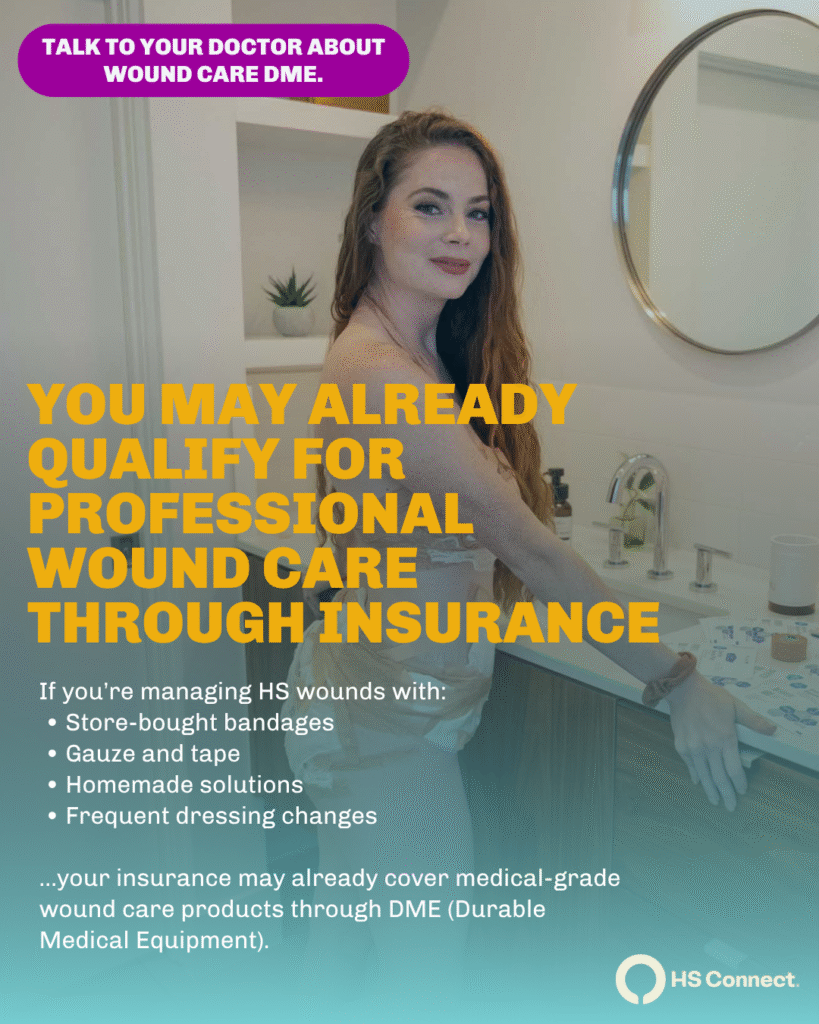
If you or someone you care for is managing HS Wounds at home using store-bought bandages, homemade dressings, or whatever seems to work, there’s something important you should know: professional-grade wound care products are available through insurance for people with HS, and your health insurance may cover it at little or no cost to you.
It’s called Durable Medical Equipment, or DME for short. And for the millions of Americans dealing with chronic wounds, surgical recovery, or hard-to-heal injuries, it can be a genuine turning point in their treatment journey.
Let’s break it all down in plain English.
What exactly is Durable Medical Equipment?
Durable Medical Equipment is a category of medical products that your physician can prescribe for you to use at home.
To qualify as DME under insurance, a product generally needs to meet a few criteria:
- It serves a medical purpose (not just for comfort or convenience)
- It’s used in your home
- It wouldn’t be useful to someone who doesn’t have a medical condition
- A doctor has ordered or prescribed it
You’ve probably heard of some common DME items — wheelchairs, hospital beds, oxygen equipment. But many people don’t realize that wound care products also fall into this category.
What does wound care DME actually include?
When most people think about wound care for HS, they picture a box of adhesive bandages from the pharmacy. Wound care DME is a completely different level of care. These are clinically designed, medical-grade products that healthcare professionals use in hospitals and clinics — and that you can use at home with proper guidance.
Depending on your specific condition, wound care DME may include products like:
- Specialised garments for holding dressings in place.
- Specialized Super Absorbent Dressings – advanced dressings designed to maintain the right moisture level, protect against infection, reduce pain and absorb moderate to heavy drainage from HS Wounds. 30 dressings per wound area are allowed each month trough DME if your insurance covers wound care.
- Specialized Foam Dressings – Soft, thin foam wound dressings that provide comfort and absorb moderate drainage
- Wound Cleansers– specialized cleaning solutions to help keep wounds clean
The exact products that apply to you depend on your condition, your wound type, and what your doctor recommends.
Why does this matter?
We hear from patients all the time who’ve been managing wounds on their own using store-bought supplies, home remedies, or creative workarounds they found online. There’s no shame in that. When you don’t know better options exist, you do the best you can.
But here’s the reality: wounds that don’t heal properly can lead to complications. And the gap between drugstore supplies and medical-grade DME is significant. Also having a medical professional review, document and treat your wounds is an essential part of living with HS. You should not have to do this alone.
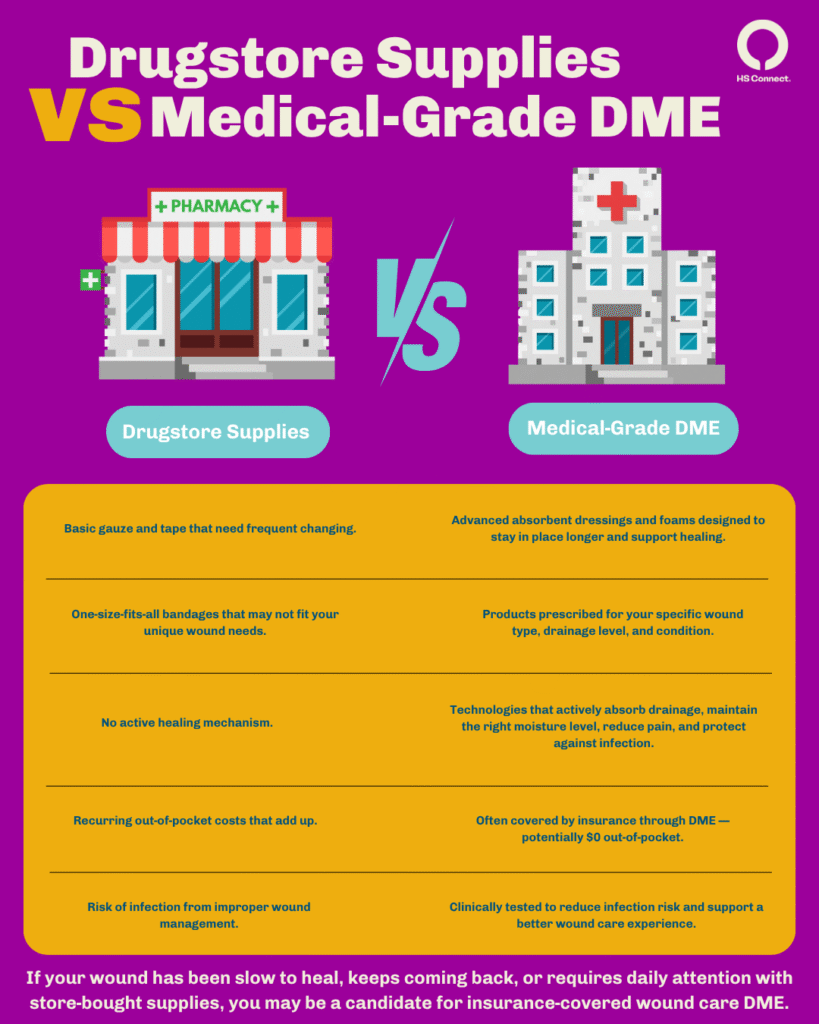
| DIY / Store-Bought | Medical-Grade DME |
| Basic gauze and tape that need frequent changing | Advanced dressings designed to stay in place longer and promote better outcomes |
| One-size-fits-all bandages | Products prescribed for your specific wound type and condition |
| No active healing mechanism | Technologies that actively pull drainage into the dressing and trap it inside |
| Recurring out-of-pocket costs that add up | Often covered by insurance — potentially $0 out-of-pocket |
| Risk of infection from improper wound management | Clinically tested to reduce infection risk and support a better experience |
This isn’t about judging anyone’s choices. It’s about making sure you know that other options exist, and that you probably don’t have to pay for them out of pocket.
| Key Takeaway If your wound has been slow to heal, keeps coming back, or requires daily attention with store-bought supplies, you may be a candidate for insurance-covered wound care DME. It costs nothing to ask. |
Does insurance actually cover wound care DME?
In most cases, yes. Here’s a quick overview by insurance type:
Medicare (Parts A & B)
Medicare Part B covers DME when your doctor certifies it’s medically necessary. For wound care, this often includes advanced dressings. You’ll typically pay 20% of the Medicare-approved amount after meeting your Part B deductible, and if you have a supplemental plan (Medigap), even that 20% may be covered.
Medicaid
Coverage varies by state, but most state Medicaid programs cover medically necessary DME with little to no copay. Some states have specific programs for wound care supplies. Check with your state’s Medicaid office.
Commercial insurance (employer plans, ACA marketplace)
Most commercial plans, including those from major insurers like Blue Cross Blue Shield, UnitedHealthcare, Aetna, Cigna, and Humana cover DME as a standard benefit. Your cost will depend on your plan’s deductible and copay structure, but many patients pay little to nothing after insurance.
| Important Note We can’t guarantee that your specific plan covers a specific product, every plan is different. But in our experience, the vast majority of patients with any form of health insurance have at least some DME coverage. It is always worth checking. |
How do I get Wound Care through my insurance?
The process is more straightforward than most people expect. Here’s how it typically works:
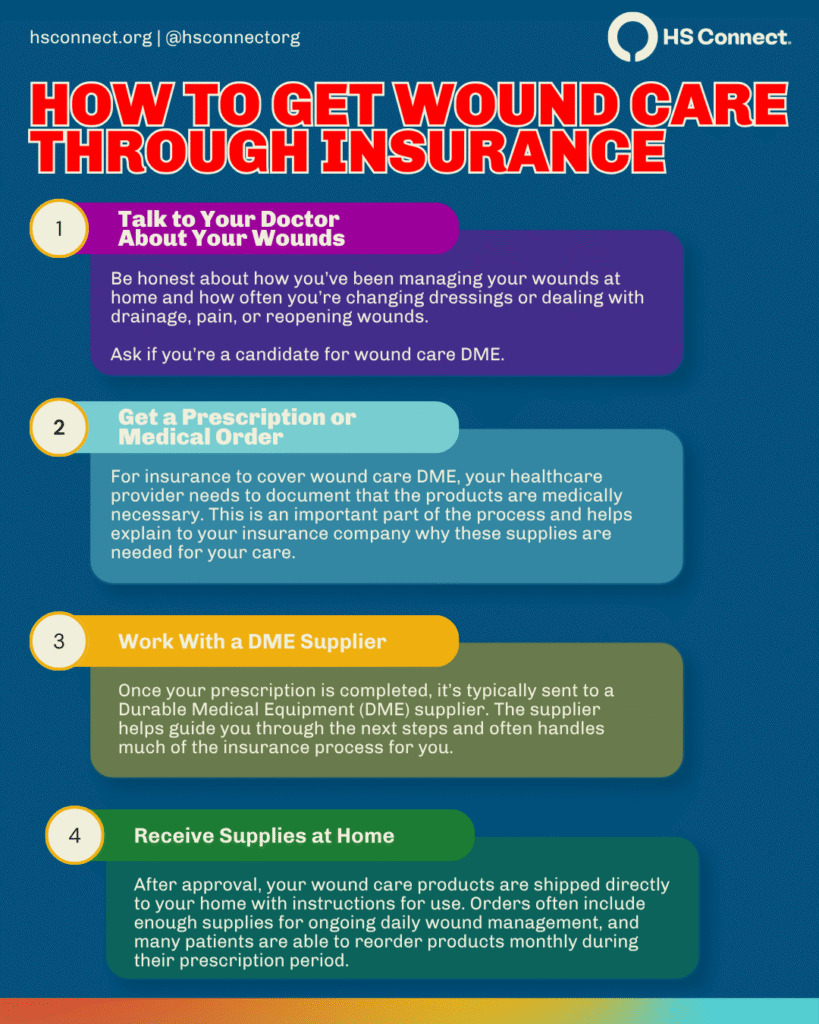
Talk to your prescriber – this can be a family doctor, a wound specialist, your dermatologist or any clinical prescriber Tell your doctor about your wounds and how you’ve been managing it. Ask specifically: “Am I a candidate for durable medical equipment for wound care?” Your physician needs to prescribe / order or order the DME for insurance to cover it.
Get a prescription or order Your physician will document the medical necessity, essentially explaining to your insurance company why you need these products. This paperwork is key. The more detail your physician provides, the smoother the approval process.
Work with a DME supplier Your physician will send the prescription / order form to a DME supplier, who handles the insurance verification, obtains any required pre-authorizations, and ships or delivers the equipment to your home. A good DME supplier does the heavy lifting so you don’t have to navigate the insurance maze alone.
Receive your equipment at home Your wound care DME arrives with instructions for use. Orders typically cover 90 days worth of product, which you can reorder from the DME each month during the 90 day period.
Start using your Wound Care Products every day! Use your wound care as directed by your healthcare provider. Follow up with your physician after 90 days to monitor progress and get a new order if needed. Many patients see meaningful improvement within weeks of switching from DIY solutions to professional wound care.
Common questions from patients
Do I need a referral or can I just order DME on my own?
For insurance to cover DME, it needs to be prescribed by a licensed healthcare provider — your primary care doctor, wound care specialist, or other treating physician. You can’t purchase it directly and have insurance reimburse you in most cases.
What if my insurance denies the claim?
Denials happen, but they’re often not the final answer. Many denials are due to incomplete paperwork, and they can be appealed. A good DME supplier will help you through the appeals process. Don’t give up after the first “no.”
How long does the process take?
In many cases, you can have DME delivered within a few days to a couple of weeks, depending on insurance verification and any pre-authorization requirements. Some products can be expedited if your wound is urgent.
Will I have to pay anything out of pocket?
It depends on your specific insurance plan. Many Medicare and Medicaid patients pay little to nothing. For commercial insurance, it depends on your deductible and copay. You can call your insurance provider to check cover.
I’ve been managing fine with what I have. Why switch?
If your wound is healing well, that’s great. But if it’s been slow to heal, keeps reopening, shows signs of infection, or requires constant attention, professional grade DME wound care could speed up recovery and reduce the risk of complications. There’s no downside to asking your doctor about it.
You don’t have to keep improvising
The most common thing we hear from patients after they switch to insurance-covered wound care is: “I wish I’d known about this sooner.”
If you’ve been managing a wound at home with store-bought supplies or homemade solutions, you’re not alone, and you’re not doing anything wrong. You just might not know yet that another option exists, and that your insurance may already cover it.
Checking your coverage is free. There’s no obligation, no pressure, and no cost to find out what’s available to you. Call your insurance provider and ask them if your policy covers wound care / DME.
Medical disclaimer: This article is for informational purposes only and does not constitute medical advice. Always consult your healthcare provider about treatment options appropriate for your condition. Insurance coverage varies