
By: Savanna Vidal, BS, MD Candidate | The George Washington University School of Medicine
Content Warning: This summary includes mention of suicide.
Study background
People with hidradenitis suppurativa (HS) are more likely to experience mental health conditions such as depression, anxiety, and substance use disorders. They also have a higher risk of suicide compared to people without HS. This risk may increase when people cannot access the care they need for both their HS and mental health.
Biologics are an increasingly common treatment for HS. Biologics are also used for the management of psoriasis, another skin condition, and have been shown to be associated with fewer occurrences of depressive symptoms in patients. However, there have not been studies looking at the impact of biologic therapy on mental health in patients with HS.
Purpose of the study
To examine if people with HS who use biologics are less likely to be newly diagnosed with mental health conditions, compared to those who do not use biologics.
How the study was done
This was a retrospective cohort study, meaning researchers looked back at data about a group of patients (rather than collecting new data). They used data from TriNetX, a large global health records database. This study specifically analyzed data from hospitals and clinics in the United States.
Patients were divided into two groups:
- People with HS who used biologics – included adalimumab (Humira), secukinumab (Cosentyx), bimekizumab (Bimzelx), ustekinumab (Stelara), or infliximab (Remicade)
- People with HS who did not use biologics
Each group had 16,152 adults with similar ages, biological sexes, and ethnic backgrounds.
Researchers reviewed medical records from up to 15 years after people started biologic treatment or 15 years after HS diagnosis for those not on biologics to see whether new mental health conditions were recorded.
Key findings
- Patients with HS who used biologics were less likely to be diagnosed with many mental health conditions compared to those who did not use biologics.
- Patients with HS who used biologics had lower rates of anxiety, bipolar disorder, post-traumatic stress disorder (PTSD), schizophrenia, alcohol and substance use disorders, mood disorders, and thoughts of suicide or suicide attempts.
- There was no clear difference in the rates of obsessive-compulsive disorder (OCD), personality disorders, or eating disorders between the two groups.
Limitations of the study
- While TriNetX is helpful because it includes information from many patients, it depends on what medical professionals write in the medical record, which may not always be complete or correct.
- The study did not include important factors that can relate to a person’s HS and mental health, such as income, social support, access to mental health care, lifestyle habits, and whether people took their biologics as prescribed
- The study did not include how severe each person’s HS was. Biologics are usually used for more severe HS, so less severe cases may not be fully represented.
Key takeaway points
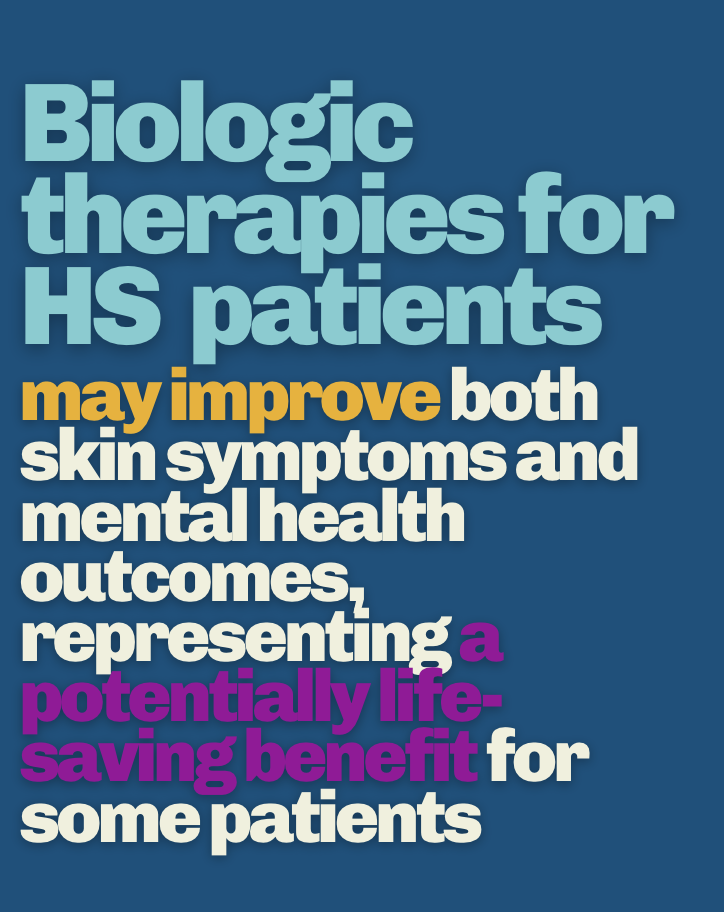
- Biologics may improve mental health diagnosis outcomes in people with HS. This may be because biologics better control HS symptoms, reduce stress, and/or lower inflammation in the body.
- However, it is important to note biologics are not the only way to support mental health in HS. They are one tool that can help by improving HS symptoms, which can also support mental health. Here is a mental health resource from HS Connect: https://hsconnect.org/healingspace/
- People who used biologics had lower rates of substance use disorders and thoughts of suicide or suicide attempts, suggesting biologics may be life-saving for some patients.
- It is important to tell your dermatologist about any mental or emotional health conditions when discussing HS management—better control of HS with biologics helps patients stay on treatment and support mental health over time.