
Key Differences, Sneaky Overlap, and Treatment Options That Actually Work
Cystic Acne or Hidradenitis Suppurativa?
More than 90,000 people a month type “cystic acne” into Google—usually while clutching a painful, swollen bump and wondering why nothing in the skincare aisle is helping. If that’s you, breathe. There’s relief ahead.
For most searchers, the answer really is classic cystic acne. But a growing slice of readers is wrestling with something deeper and trickier called hidradenitis suppurativa (HS)—a chronic inflammatory disease that loves to masquerade as acne, especially in places acne rarely hangs out (hello, armpits and groin). Treat HS like ordinary zits and you’ll waste time, money, and a fair bit of sanity.
Cystic Acne 101: The Usual Suspect
Cystic acne (sometimes called nodulocystic acne) is the heavyweight champ of acne vulgaris. Instead of dainty whiteheads, you get large, red or purple lumps buried deep in your skin. They hurt to touch, rarely come to a head, and love to leave scars if you squeeze.
What Causes Cystic Acne?
• Hormonal surges—think puberty, menstrual cycles, polycystic ovary syndrome (PCOS).
• Genetics—if your parents had severe acne, you drew the short straw.
• Excess oil + sticky skin cells—plug the follicle, trap bacteria, cue inflammation.
• Diet & lifestyle—high-glycemic foods, dairy, stress, and poor sleep can crank up breakouts.
Where It Shows Up
Face (cheeks, jawline, chin), back, chest, and sometimes shoulders. If your nightmare lump is smack in the T-zone, odds favor cystic acne.
Hidradenitis Suppurativa 101: The Master Impersonator
Hidradenitis suppurativa is not just “really bad acne.” It’s a separate immune-driven disease that starts when hair follicles in high-friction zones clog, burst, and trigger a never-ending cycle of inflammation, tunneling tracts, and scarring. Dermatologists classify HS in three Hurley stages, but the story’s the same: painful lumps that come back in the same sweaty places.
HS Hotspots
• Armpits
• Groin and inner thighs
• Under the breasts or belly folds
• Buttocks and perineum
Translation: if your “pimple” is under your arm or in the nether-regions, pause before you slap on typical acne cream.
Quick-Glance Differences
| Feature | Cystic Acne | Hidradenitis Suppurativa |
| Main search term | cystic acne | cystic acne vs HS |
| Common age | Teens–30s | *Typically starts post-puberty, 15-25. However, it can present at any age. |
| Location | Face/torso | Armpits, groin, under breasts |
| Odor | Minimal | Often noticeable drainage smell |
| Sinus tracts | Rare | Hallmark sign |
| Scarring | Ice-pick or rolling | Rope-like, “bridge” scars |
Got acne cysts under armpit that keep returning? The column on the right deserves your attention.

Nodules vs Cysts: Dermatology Lingo Decoded
Your doctor may toss out words that sound interchangeable. They’re related—but not identical.
• Nodule: A firm, solid mass deeper than a papule, usually ≥ 1 cm.
• Cyst: A pocket filled with pus or semi-solid material.
Cystic acne often presents with both nodules and cysts (thus nodulocystic). HS lesions start as inflamed nodules but can morph into cyst-like abscesses that break the skin or drain through sinus tracts. In practice, you just need to know that both hurt like heck and require tailored treatment.
Cystic Acne vs HS: Detailed Symptom Checklist
Use this to jot yes/no answers before your derm appointment.
| Symptom / Sign | Mostly Acne | Mostly HS |
| Appears on face or upper back first | ✔ | ✖ |
| Appears in armpits/groin first | ✖ | ✔ |
| One-off monster zit, then months of calm | ✔ | ✖ |
| New bumps pop up along old scar lines | ✖ | ✔ |
| Foul-smelling drainage stains clothes | Rare | Common |
| Lesions connect under the skin | Rare | Common |
| Improves with standard benzoyl peroxide wash | Sometimes | Seldom |
If you’re ticking more boxes under “Mostly HS,” skip the drugstore aisle and book a dermatologist who treats HS regularly.
Treatment Paths That Crush Cystic Acne
Good news: most cystic acne responds to a smart, stepwise plan.
Topical Staples
- Adapalene 0.3 % or Tretinoin – keep pores flowing.
- Benzoyl Peroxide 2.5–5 % – kills C. acnes bacteria.
Oral Meds
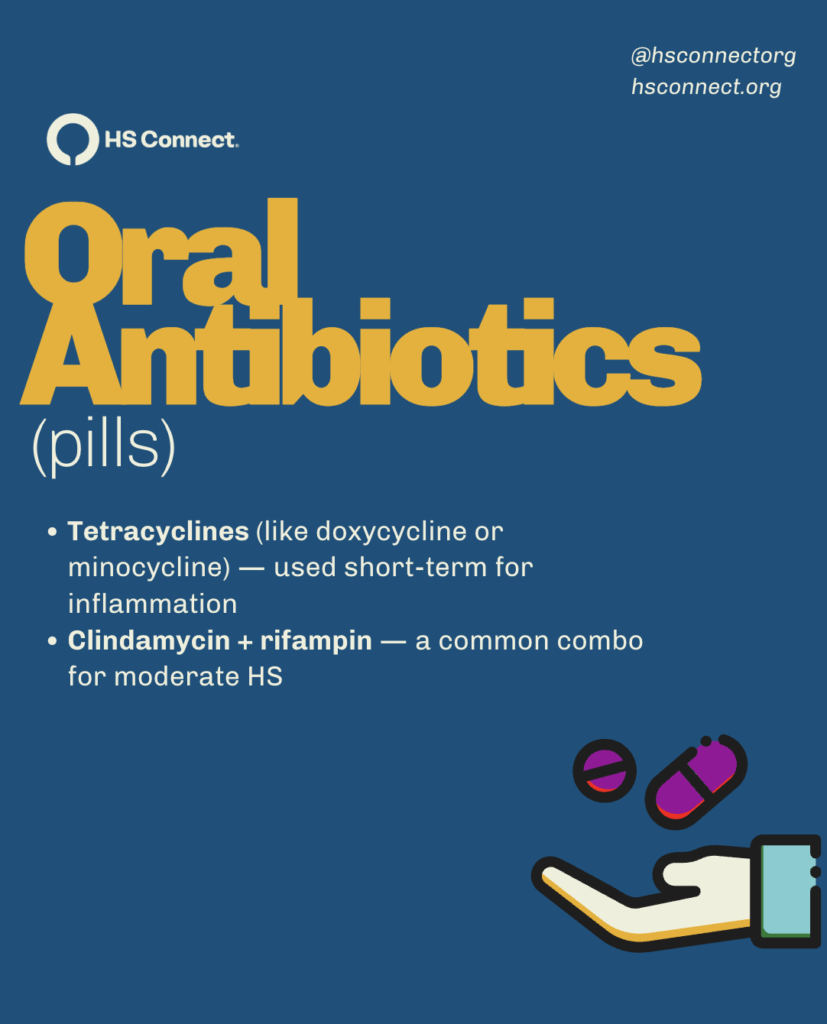
• Doxycycline or Minocycline – reduce inflammation fast.
• Combined Oral Contraceptives / Spironolactone – for hormonally driven breakouts.
• Isotretinoin (Accutane) – the nuclear option ; 5-7 months can wipe the slate clean for good.
In-Office Boosters
• Corticosteroid injections – deflate a single cyst in 48 hours.
• Light or laser therapy – adjunct for scarring or antibiotic resistance.
Follow-up tip: pair meds with a low-glycemic, dairy-mindful diet and stress-reduction (sleep > 7 hrs nightly). That’s not Instagram fluff—it genuinely helps.
Treatment Paths That Tame Hidradenitis Suppurativa
HS needs heavier artillery and lifestyle reinforcements.
Prescription Playbook
| Class | Examples | Why It Works |
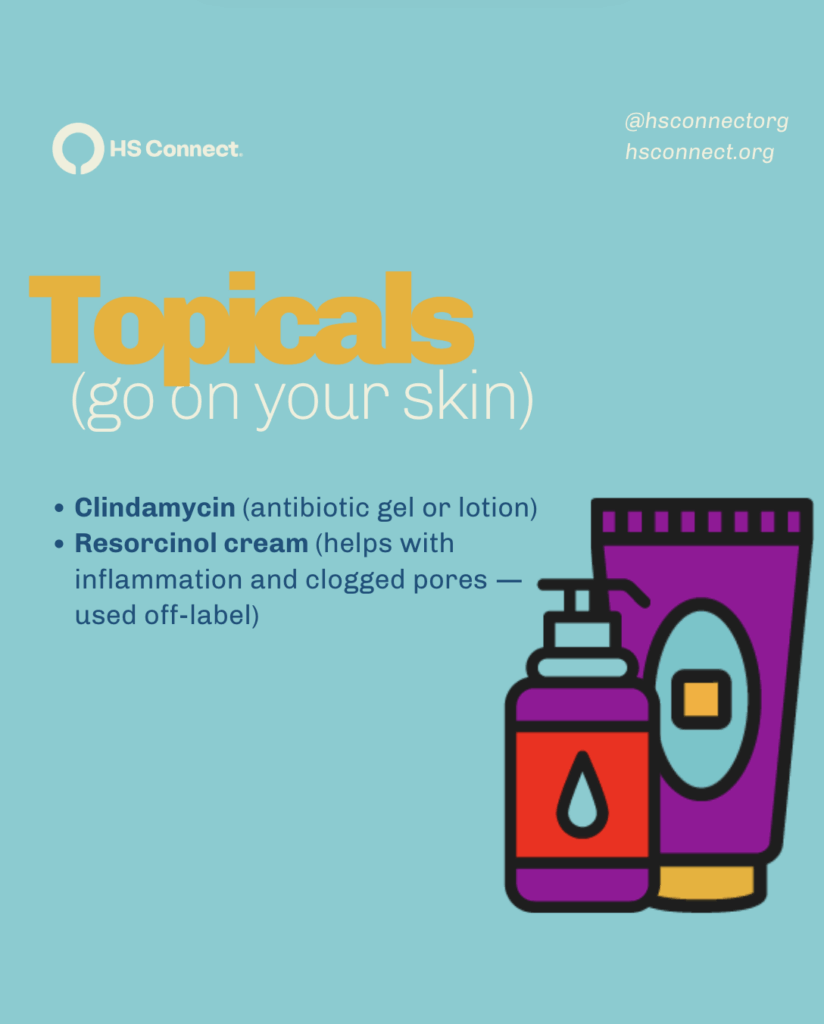
| Topical antibiotic | Clindamycin 1 % | Mild HS, early nodules |
| Oral antibiotics | Doxy 100 mg bid; Clinda + Rifampin combo | Lengthy courses calm flares |
| Hormonal agents | Spironolactone; cyproterone | In women; decreases androgen drive |
| Biologics | Adalimumab (Humira®), Secukinumab | Blocks TNF-α or IL-17—game-changers |
| Immunosuppressants | Cyclosporine, Methotrexate | For stubborn moderate/severe HS |
| Short high-dose steroids | Prednisone tapers | Rescue for explosive flares |
Procedural Power-Moves
• Nd:YAG Laser Hair Removal – reduces follicle plugs.
• CO₂ Laser Deroofing – opens sinus tracts; heals flat.
• Wide Excision Surgery – removes disease-tunnel network and decreases relapse.
Lifestyle Levers
- Antimicrobial Wash (4 % chlorhexidine) daily on HS zones.
- Moisture-Wicking, Seamless Clothing – cut chafing.
HS rarely “vanishes,” but this combo can push it into months (even years) of remission.
Why Mistaking HS for Cystic Acne Slows Healing
- Wrong meds – acne topicals do zilch for sinus tracts.
- Delayed diagnosis – average HS patient waits 7+ years for a correct label.
- Scarring escalates – untreated HS forges thick bridges that restrict movement.
- Mental health toll – shame + pain fuel anxiety and depression.
Moral: Listen to location clues and smell signals; then push for a second opinion if needed.
Day-to-Day Skin Care Tips That Help Either Condition
| Habit | Cystic Acne Win | HS Win |
| Fragrance-free cleanser, pH ~5.5 | ✓ | ✓ |
| Two-minute lukewarm showers | ✓ | ✓ (excess heat=flare) |
| Fresh towel & shirt post-workout | ✓ | ✓✓ |
| Silicone-based scar gel | ✓✓ (face) | ✓ (post-surgery) |
| Mindful breathing or yoga | ✓ (stress breakouts) | ✓ (pain coping) |
Consistency beats perfection—pick two habits and stick to them this month.

Quick-Fire FAQs
Is HS contagious?
No. Zero. Not even a little.
Can I have both conditions?
Yes. About 15 % of HS patients also fight facial cystic acne. Treat each region appropriately.
Do dairy and sugar matter for HS too?
Small studies suggest high-glycemic diets can stoke HS inflammation. A trial elimination phase won’t hurt.
What if my doctor says “just lose weight”?
Weight, smoking, hormones, and genetics all play a role, but dismissive advice is not OK. Seek a dermatologist versed in HS.
Your 3-Step Action Plan
- Document Everything – Photos, pain scale, drainage notes, triggers.
- Book a Derm Appointment – If lesions are off-face or smelly, mention HS up-front.
- Share This Article – A friend searching “cystic acne vs HS” may think they’re alone; you could change their journey.

You don’t have to live at the mercy of monster bumps. Whether it’s textbook cystic acne or stealthy HS, targeted care exists—and it starts with the right name for the pain.
Found this helpful? Follow HS Connect on socials for fresh tips, community stories, and science-backed hope. Clearer, calmer skin is out there—and so are we, cheering you on every step.
Medical Disclaimer
The information provided by HS Connect (“we,” “us,” or “our”) on this website HSConnect.org] (the “Website”) is for general informational purposes only. All content, including text, graphics, images, and information, is presented as an educational resource and is not intended as a substitute for professional medical advice, diagnosis, or treatment.
Please consult with a qualified healthcare provider before making any decisions or taking any action based on the information you find on this Website. Do not disregard, avoid, or delay obtaining medical or health-related advice from your healthcare provider because of something you have read on this Website.
This Website does not recommend or endorse any specific tests, physicians, products, procedures, opinions, or other information that may be mentioned on this website. Reliance on any information provided on the Website, its content creators, or others appearing on the website is solely at your own risk.
If you think you may have a medical emergency, call your doctor, go to the nearest emergency department, or call emergency services immediately. We are not responsible for any adverse effects resulting from your use of or reliance on any information or content on this Website.
By using this Website, you acknowledge and agree to this disclaimer in full.