By: Savanna Vidal, BS, MD Candidate | The George Washington University School of Medicine
Content Warning: This summary discusses eating disorders.
Study background
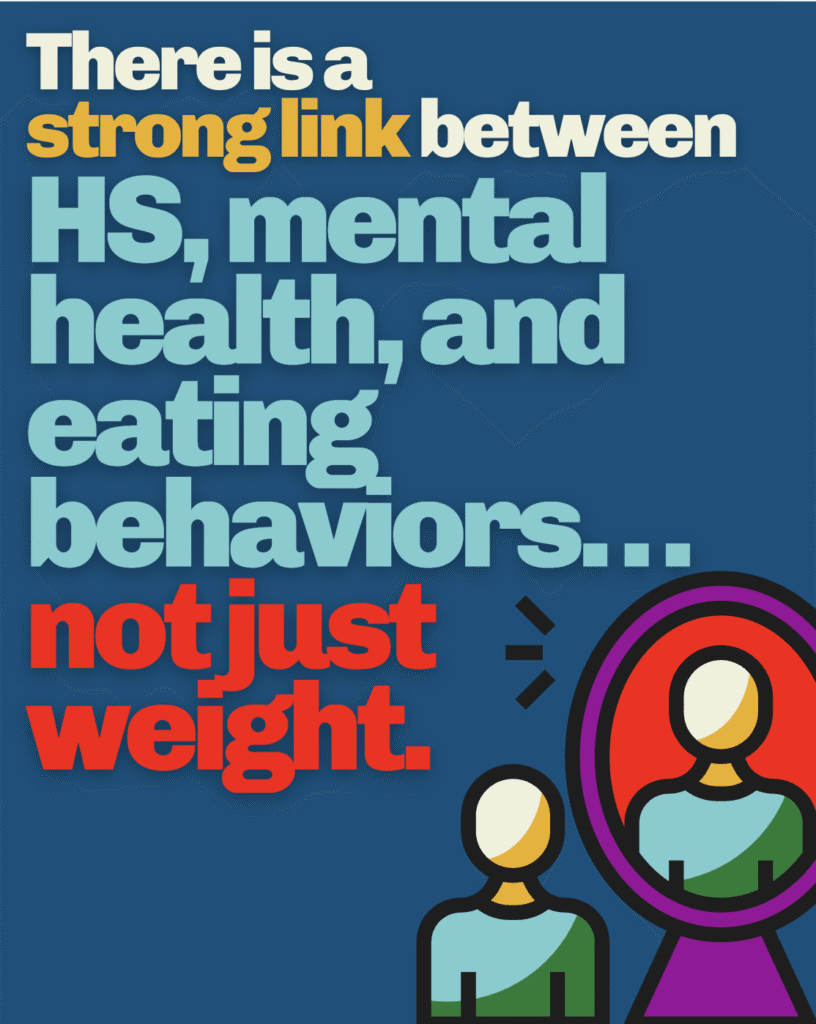
Hidradenitis suppurativa (HS) is more common in people with obesity, which is why weight-loss is sometimes recommended by doctors as part of HS management. However, many people with HS already experience negative body image, stigma, and mental health conditions like anxiety and depression. In this setting, focusing on weight may increase the risk of disordered eating and eating disorders. However, the relationship between HS and eating behaviors is not yet well understood.
Disordered eating (DE) refers to unhealthy eating behaviors that can harm physical or mental health, even if it does not meet criteria for an eating disorder. Eating disorders (EDs) are diagnosed medical conditions involving persistent disturbances in eating behavior and body image concerns.
In HS, DE and EDs can take many forms and do not always lead to weight gain or loss. They may be influenced by disease-related factors such as stress from flares and living with a chronic condition leading to emotional eating or overeating as coping mechanisms, treatment side effects (e.g., stomach upset from antibiotics), dietary restriction to manage symptoms (e.g., removing foods to prevent flares), and physical limitations from HS symptoms (e.g., difficulty exercising due to pain).
Purpose of the study
To examine the relationship between HS and DE/EDs.
How the study was done
This was a systematic review. In this type of study, researchers combined and analyzed results from multiple published studies on the same topic.
Seven eligible studies were included, with a total of 2,363 patients. The average age of patients in the studies was 44 years old, and about 74% were female.
Key findings
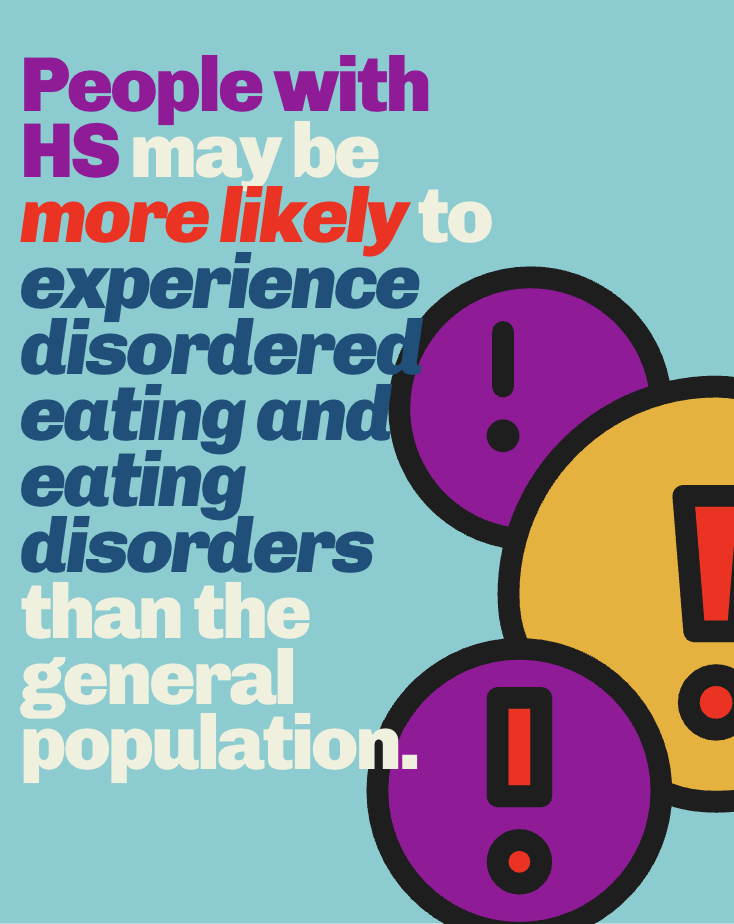
- About 4% of patients had a diagnosed ED. For comparison, EDs affect less than 1% of the general population.
- The most common eating disorders were binge-eating disorder (~67% of ED cases), followed by bulimia nervosa (~9%) and anorexia nervosa (~8%).
- About 28% of patients showed DE behaviors. Among these behaviors:
- ~1 in 3 (36%) involved laxative, diet pill, or diuretic misuse
- ~1 in 3 (32%) involved dieting, weight concerns, or eating-related anxiety
- ~1 in 5 (21%) involved food addiction
- ~1 in 10 (10%) involved emotional eating
- Patients with HS also scored higher on measures of emotional eating and eating in response to external cues (like seeing or smelling food) compared to people without HS.
Limitations of the study
- The studies included were not all high quality; most were rated as fair or good.
- The studies were different from each other in design and methods, which makes results harder to combine and compare.
Key takeaway points
- Eating disorders and disordered eating are more common in people with HS than in the general population.
- Rates of ED and DE are similar to other mental health conditions seen in HS, such as depression (~17%) and anxiety (~5%).
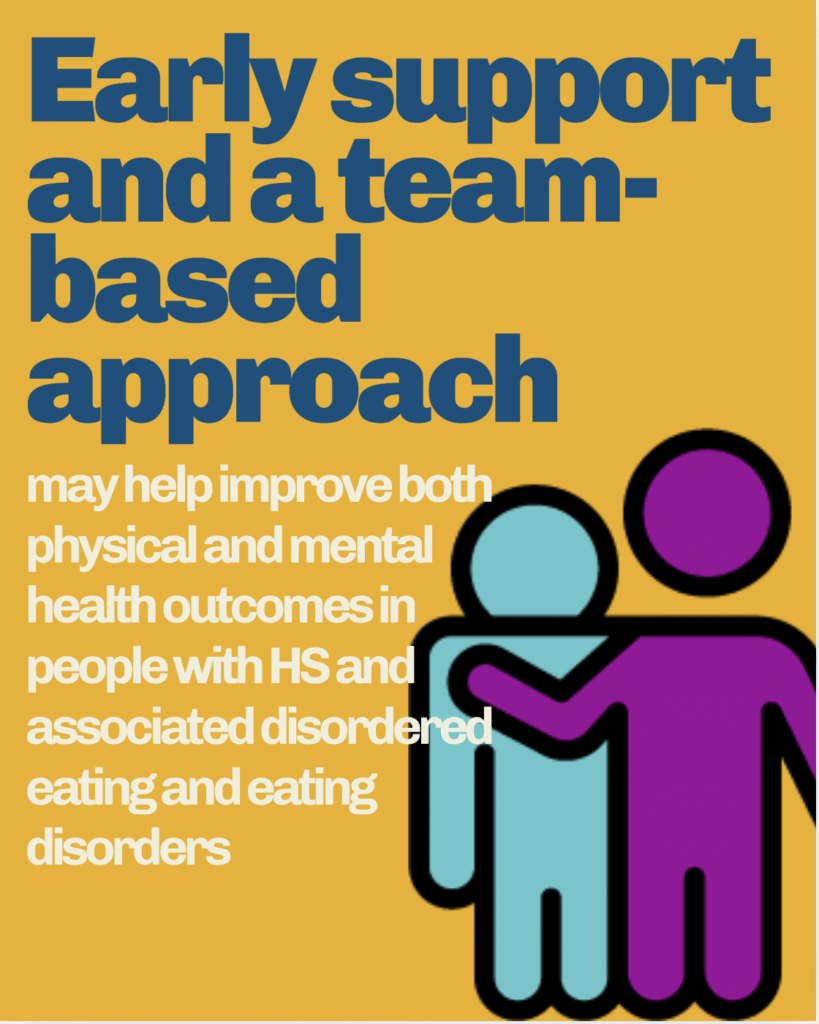
- Weight does not define a person’s health or value. The goal is to support overall well-being and help people eat in a way that supports both their health and their HS.
- Here is a nutrition resource from HS Connect: https://hsconnect.org/nutrition/
- Talk with your healthcare team about eating habits, body image, or weight concerns. This can help identify issues early and allow you to be connected to mental health professionals and dietitians who can help.